
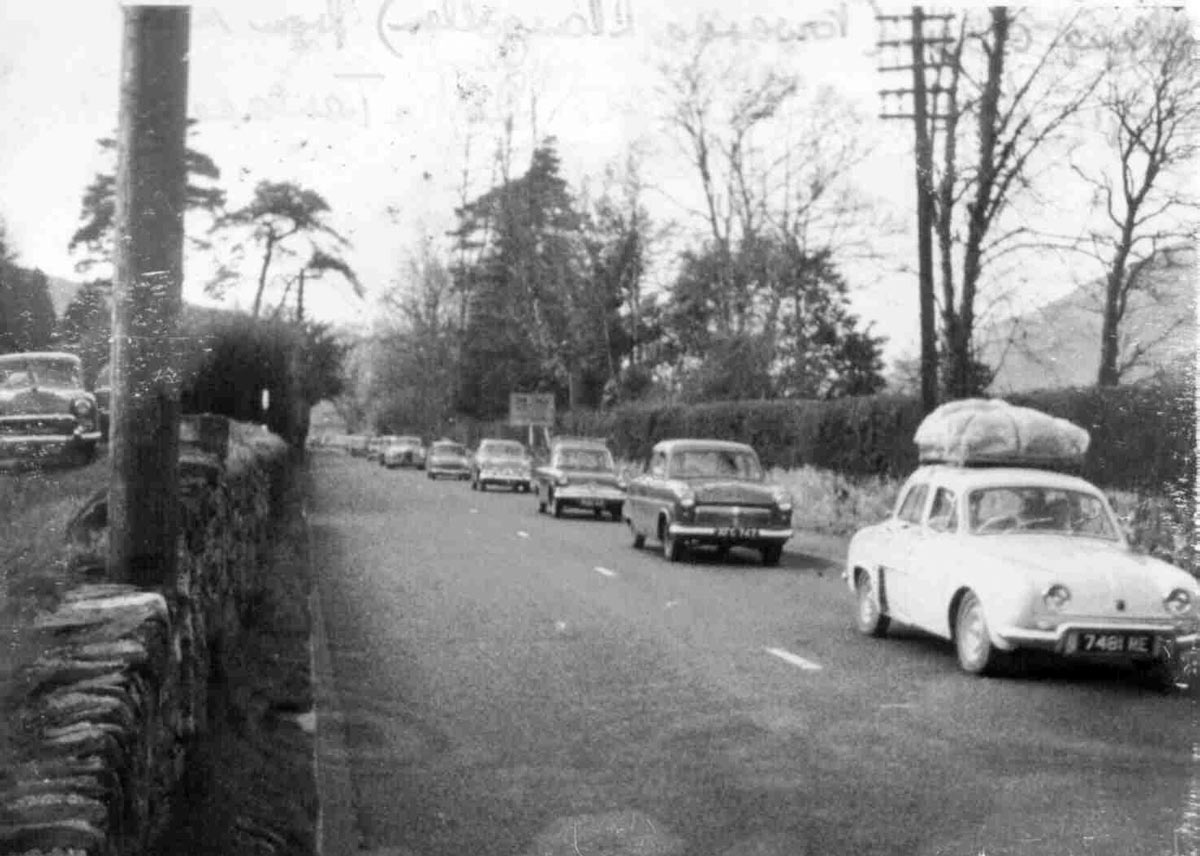
Prior to the A5 construction, the main highway through Llangollen from the south was via Church Street, Chapel Street and Hall Street and then on through Berwyn en route to Ireland. Continuing down Bridge Street instead of turning up Chapel Street would lead to Llangollen Mill and over the Bridge to Llantysilio. Many of the oldest properties in Llangollen are thus found on these streets.
Telford’s A5, built in 1815 as the main road from London to Holyhead, substantially reduced travelling times and opened the way for tourism and commerce. Up until the latter part of the 19th century the streets of the town were simply hard packed earth with no drainage at the sides. They were muddy in wet weather and dusty in dry weather as well as being littered with the sewage thrown from the houses. At an inquiry held in 1853 Mr. Charles Richards commented that the highways throughout the parish were badly kept. He suggested that the roads should be under one management and that he should be a paid officer. However, in 1870, a letter in the Llangollen advertiser still said ‘A lady in a long and big dress and high heeled boots would not be able to cross the bridge or walk throu one of the streets without being rendered unfit to enter a friends drawing room’. However, in 1874 there are reports of boatloads of stone being brought from Trevor Rocks to improve the streets in the town, so improvement was on its way.
The routes running through Llantysilio have also seen change over the years. In the past, many of the routes were used by drovers leading their stock to market in Llangollen. Before the building of the Horseshoe Pass in 1811, all travellers heading north from Llangollen had to either travel through Llantysilio and over the top of the mountains or up to Pentredwr and up the old pass (Bwlch yr Oernant).
Smaller roads in the countryside remained little more than dirt tracks until well into the 20th century. Up until the 1930s many people still used horse and cart for their daily transportation.


